At 8:12 a.m., he opened the dashboard the way he always did, coffee in one hand, performance metrics in the other. Traffic was steady, paid campaigns were pacing as expected, and social engagement looked healthy. But one metric stood out immediately: embedded video plays across the website were down 32%.

Not gradually. Not seasonally. Overnight. The week before, a quiet but significant update had gone live. Following internal discussions between legal, compliance, and marketing leadership, all YouTube embeds were reconfigured to load only after user consent. No automatic loading. No background tracking. No silent cookie drops.
The SEO team understood the necessity, privacy regulations were tightening, and consent enforcement was no longer optional. Transparency had become part of brand trust. Still, performance mattered too.
When he pulled up Google Analytics 4, the picture became more nuanced. Scroll depth remained stable. Page speed had actually improved. Third-party scripts had been reduced. Core Web Vitals looked cleaner than they had in months. Yet engagement with embedded videos had clearly declined.

Previously, YouTube players loaded instantly, thumbnails were visible, and the opportunity to click was frictionless. Now, visitors were presented with a consent-dependent placeholder, and the video would only load after accepting marketing cookies, a step many users simply ignored. By mid-morning, internal messages began circulating:
Were remarketing pools shrinking? Would reduced watch interaction impact SEO signals? Had the team unintentionally traded performance for compliance? What started as a responsible privacy update was quickly becoming a strategic dilemma. In 2026, this is no longer a technical issue, it is a performance question every corporate marketing team must confront: when you block YouTube until consent, are you protecting your brand, or quietly weakening your results?
The main issue is not whether YouTube should be blocked until consent. In regulated markets, that decision is largely settled. The real issue lies in what happens next and how that decision reshapes user behavior, data quality, and performance measurement.
When YouTube embeds are blocked until consent, friction is introduced into what was previously a seamless interaction. Users must take an additional step before the video loads. Even a small layer of friction can reduce interaction rates. In corporate environments, that reduction translates into fewer engagement signals, smaller remarketing pools, and incomplete behavioral data.
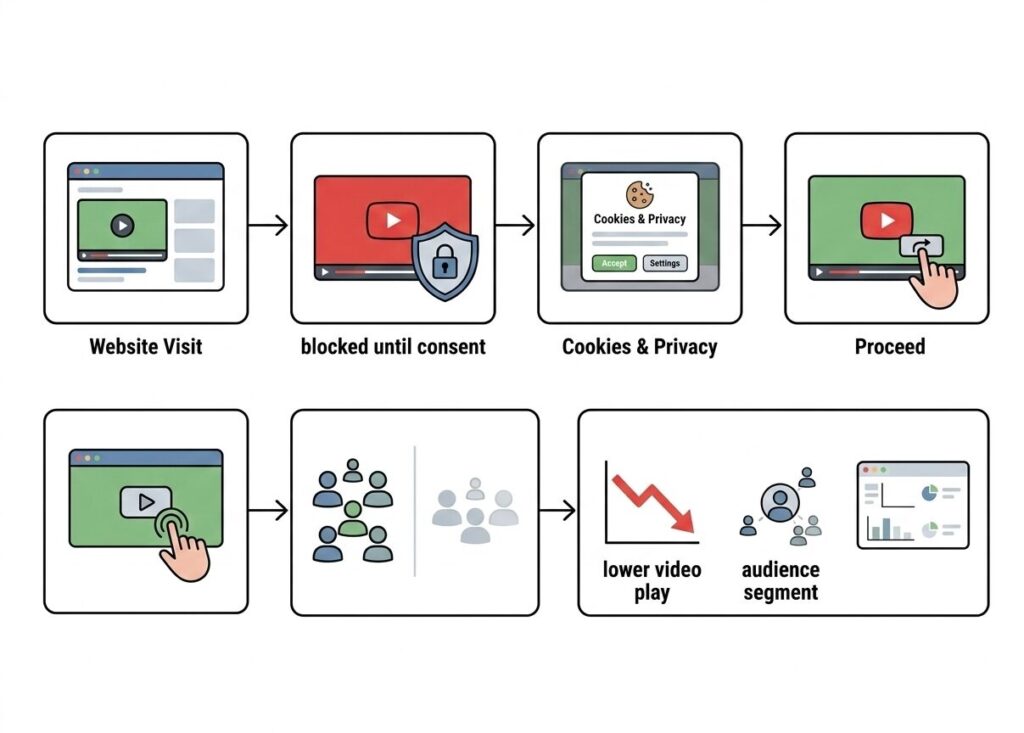
At the same time, the absence of automatic tracking creates blind spots. Marketing teams may see declining video plays but struggle to determine whether the cause is reduced interest or reduced accessibility. Attribution models inside Google Analytics 4 can become skewed when consented and non-consented users behave differently.
The core issue, therefore, is not privacy versus performance. It is visibility versus friction. When consent controls are implemented without thoughtful UX design and measurement adjustments, performance appears to decline even if underlying interest has not changed.
The solution is not to reverse the privacy decision. Blocking YouTube until consent is increasingly a regulatory and brand necessity. The real solution lies in redesigning the experience around consent, measurement, and intent.
Here is how corporate marketing teams should approach it:
- Replace blank placeholders with high-intent previews. Use a strong custom thumbnail, a clear play button, and short microcopy explaining that the video will load after consent. Make the interaction intentional, not accidental.
- Separate “video access” from “marketing tracking.” Where possible, configure consent categories clearly so users understand what they are enabling. Clarity improves opt-in rates.
- Track the right events.
Inside Google Analytics 4, measure:
- Click to enable video
- Click to play
- 25%, 50%, 75% watch milestones
To better understand how video engagement is measured on websites, this short tutorial video from Analytics Mania walks through how to locate and analyze video interaction metrics inside Google Analytics 4, helping marketers see how users actually interact with embedded videos.
This restores visibility even when raw video plays decline.
- Improve page speed to offset friction. Blocking YouTube reduces third-party scripts and improves load time. Lean into that advantage. Faster pages increase overall engagement.
- Align teams on new KPIs. Instead of focusing only on total video plays, evaluate:
- Consent rate
- Engaged session rate
- Conversion impact
- High-intent viewers often convert better than passive viewers.
- Test and iterate.
Run A/B tests on thumbnail design, consent messaging, and placement. Small UX improvements can recover much of the lost interaction.
Ultimately, privacy-first design does not have to weaken performance. When implemented strategically, it filters for intent, improves data quality, and strengthens long-term trust which, in 2026, is a competitive advantage rather than a compromise.
The drop in watch time was never the real story. It was a signal.
When YouTube embeds are blocked until consent, performance metrics shift. Some numbers go down. Others improve. Page speed increases. Third-party script weight decreases. Engagement becomes more intentional. What appears at first to be a loss may actually be a recalibration.
The key takeaway for corporate marketing teams is this: privacy does not weaken performance.
If consent is treated as a legal obstacle, it introduces friction and confusion. If it is treated as a design challenge, it becomes an opportunity. An opportunity to clarify value. To earn interaction. To measure intent more accurately. To build trust rather than extract clicks.
In 2026, performance marketing is no longer just about volume. It is about quality, transparency, and sustainable data practices. Teams that adapt their KPIs, redesign their video experience, and align SEO, paid media, and compliance around a shared framework will not fall behind.
They will operate with cleaner data, stronger user trust, and more resilient performance.
The real question is no longer whether to block YouTube until consent.
It is whether your strategy is mature enough to handle what happens next.
If you want to explore the technical side of implementing privacy-friendly YouTube embeds, two useful guides are worth reviewing. The article from Decareto explains how standard YouTube embeds can transmit user data to Google and why enabling privacy-enhanced mode and loading videos only after user consent are key steps toward compliance.
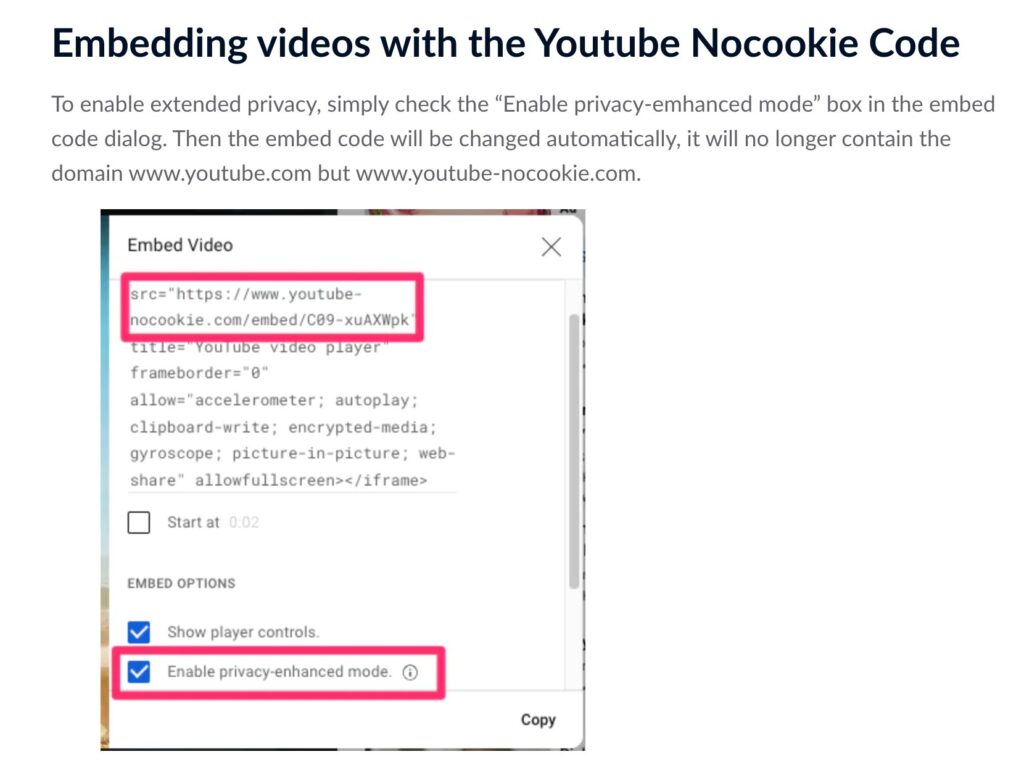
In addition, the guide from Complianz walks through how websites can block YouTube iframes until consent is granted and then load the video dynamically after approval, a common approach used by cookie-consent platforms.