
Privacy Is Now Part of the Measurement Stack
The way we handle user data has changed for good. Whether it’s GDPR in Europe, CCPA in the US, or PDPA/PIPL across Asia, the direction is the same: privacy is no longer just a compliance requirement. It now affects brand trust, analytics accuracy, and how media campaigns learn.
What is a CMP?
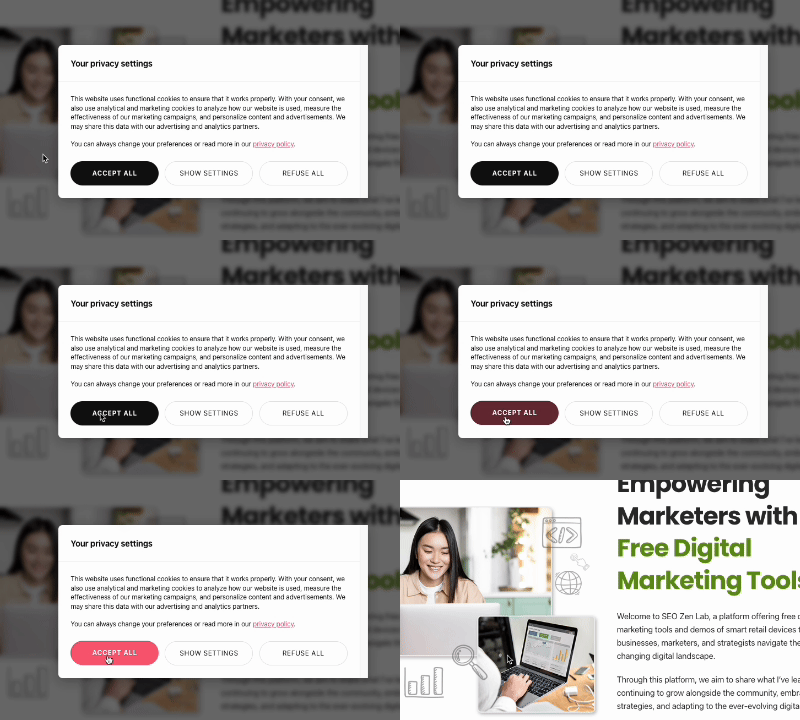
A Consent Management Platform (CMP) is simply a system that asks for consent and stores the user’s choices. It sits between the user and your tracking stack. Instead of blocking everything by default, it manages which tags can fire based on what the user allows. This means GA4, ads, and pixels should only activate after the user opts in.
Here’s a short video that visually explains what a Consent Management Platform
Why It Matters for Marketers
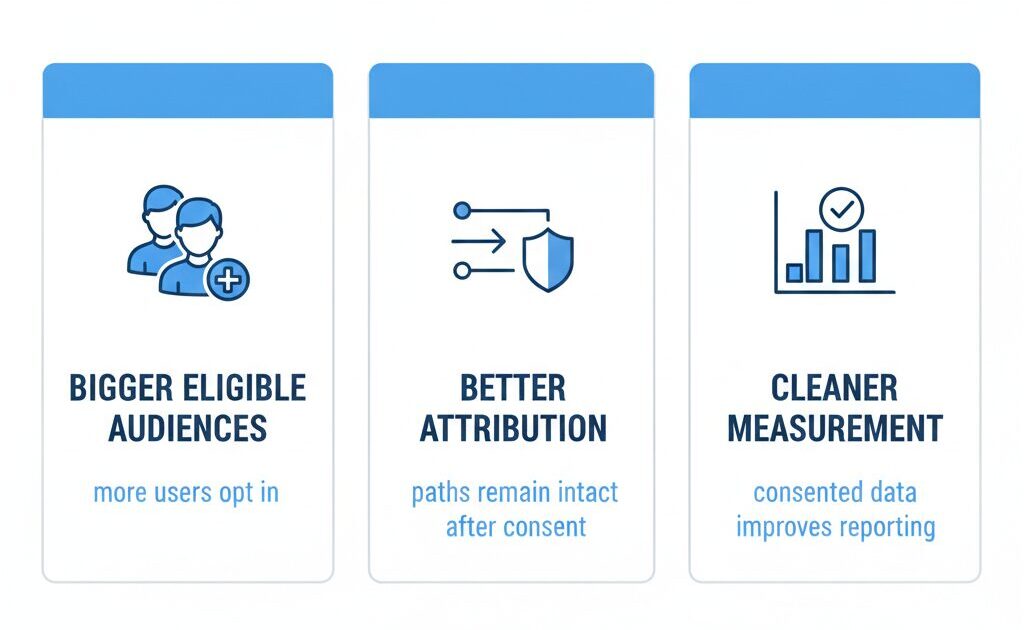
If you’re running performance or growth campaigns, a CMP is now part of your data foundation. Three reasons:
1. Bigger Eligible Audiences
Without consent, you may lose visibility on a large share of traffic (EU markets can see 60–80% drops if unmanaged). A CMP helps maximize opt-ins and gives you a larger base for remarketing and modeling.
2. Better Attribution
When users decline tracking, the conversion path breaks. Modern CMP setups allow platforms to use modeled conversions to estimate performance when direct signals are missing.
3. Cleaner Measurement
Decisions made on incomplete or unclean data waste budget. CMPs ensure analytics systems only use consented data, which improves the quality of reporting and insights.
Impact on Media Buying
With third-party cookies going away, performance media is shifting toward first-party data and contextual signals. Instead of relying on cross-site tracking, brands now focus on users who willingly share data (email, login, CRM) and on content-based targeting. This adds some friction, but brands that respect user choice often see higher loyalty and longer customer value.
Stay Informed on Consent, Analytics & Performance
Role of Analytics
Analytics teams are the technical link between CMP and media. They ensure that tracking tags fire only after consent and that the data layer tells GA4 and the ad platforms how to treat each user. They also help model gaps when direct data cannot be collected, keeping ROI measurement functional.
Cross-Team Alignment
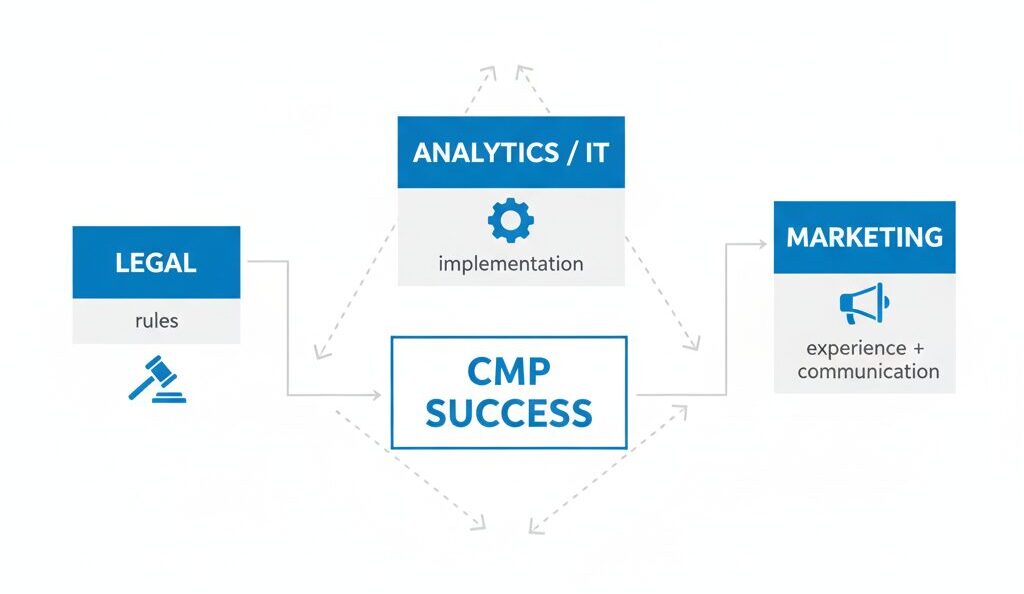
A working privacy approach requires three teams working together:
- Legal sets the rules and ensures compliance.
- Analytics & IT Teams handle implementation and data flow.
- Marketing manages the experience and explains the value exchange (e.g., access to content, features, or offers in return for consent or login).
When these teams don’t align, either compliance risk increases or measurement breaks.
Real Examples
Smart brands are already using privacy as an advantage. One major Australian broadcaster simplified their consent experience with plain language before it became mandatory. Engagement increased and more users created accounts, improving their first-party data strategy. Bose uses a CMP to align teams and deliver personalization in a way users actually trust.
Privacy maturity takes time. It’s not a one-week project. The earlier you start, the easier it is to build a media and measurement stack that still works in a privacy-first environment.